
How to Choose Teaching Learning Materials for an Anganwadi Centre
Use a practical selection and handover checklist for Anganwadi TLM: activity goals, language, age guidance, demonstrations, storage and procurement specifications.
By Smart Anganwadi™ · Published
Overview
Choose Anganwadi teaching-learning materials by starting with the children and intended activity, then checking usability, age guidance, language, care and storage. The strongest procurement brief explains what the facilitator will do with each resource, not simply how many pieces a box contains. This checklist complements the broader TLM guide and helps a centre team review a sample, compare proposals and prepare an itemised handover record.
Write an activity brief before a shopping list
For each material group, describe the experience: a shared story, sorting objects, making a pattern, counting actions or pretend play. Note the children's language, available space and facilitator support. Do not use a catalogue category as a substitute for this planning. A resource suitable for one centre may be difficult to use in another with different space, storage or language.
Review a sample through use
Ask the facilitator to locate the resources, read the instructions and demonstrate an activity. Check whether the target and symbols are clear, parts can be handled as intended, and the task supports conversation or exploration. Try returning all items to storage afterwards. A visually attractive sample can still be difficult to organise or explain; note these issues before choosing quantities.
Request variant-specific safety and care information
Review the current age guidance, small parts, edges, finish, cleaning method and supervision instructions. Ask for applicable documentation rather than assuming a phrase such as child-friendly is a certification. Keep relevant documents with the accepted item specification. Where evidence is missing, request clarification; do not publish or repeat an approval claim without the actual supporting record.
Check language and inclusive participation
Choose pictures, stories and prompts familiar to the children. Confirm printed scripts separately from the language an adult can use orally. Consider whether children can respond through speech, pointing, touch, movement or partner discussion, as appropriate to their needs. A translated label alone may not make an entire activity accessible; the facilitator should try the intended format.
Compare quotations with the same specification
Use an itemised comparison so that price differences are not confused with differences in quantity or support. Confirm taxes, delivery, installation where relevant, orientation and replacement responsibilities in writing.
| Check | Record in the specification |
|---|---|
| Identity | Exact item and variant, not just a broad kit name. |
| Contents | Quantity of every included item and separately priced accessory. |
| Use | Activity purpose, instructions and current age guidance. |
| Care | Cleaning, storage, charging where relevant and maintenance contacts. |
| Handover | Delivery locations, acceptance checks and missing-item process. |
| Support | Demonstration or orientation scope and responsible contact. |
Plan handover and replenishment
At delivery, check quantities and condition against the accepted list, record exceptions and agree follow-up. Keep a simple inventory of reusable and consumable resources. Assign responsibility for cleaning, missing parts and replenishment; a centre kit is not complete if essential resources cannot be replaced or found. Review use after an initial period before repeating the same order across additional centres.
Apply the same checks to a robot kit
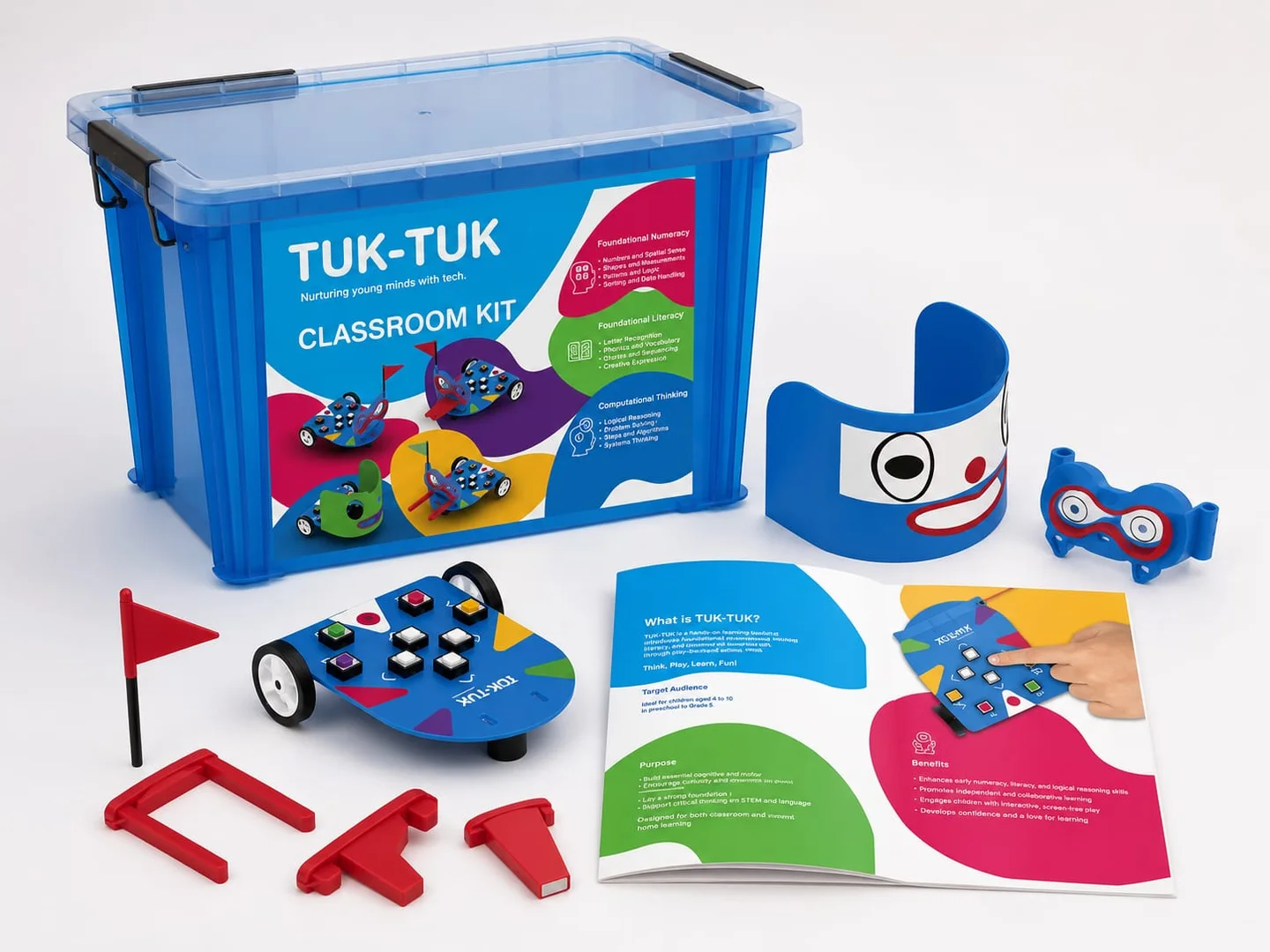
For TUK-TUK, a demonstration should show the physical controls, a compatible mat, a facilitator-led challenge and how the equipment is stored afterwards. Confirm which mats and accessories are in the selected package. An existing product photo is context, not a signed bill of materials. Use the dedicated product and Anganwadi kit pages to frame the enquiry.
Educational context
Official guidance provides educational context, not approval or certification of this product.
- NCERT: National Curriculum Framework for the Foundational Stage (2022)
- Ministry of Education: NIPUN Bharat guidelines
Related learning guides
Planning an FLN or Anganwadi learning project?
Request a demonstration, current itemised contents and a written project quotation. Smart Anganwadi supplies and implements funded projects; it does not provide grants.
Request a Demo · Request Product Details
Smart Anganwadi™ is a tech-enabled Anganwadi implementation and execution partner operated by Arihant Enterprises, Thaltej, Ahmedabad, Gujarat 380058, India | info@smartanganwadi.com | +91 99982 43365. It is a private company, not a government department or scheme, and does not provide grants, funding, loans or any assistance or government financial support.