
Screen-Free Robotics for Early Childhood Learning
Explore physical controls, prediction, route planning and teacher-guided conversation in screen-free robotics, with practical early-childhood activity examples.
By Smart Anganwadi™ · Published
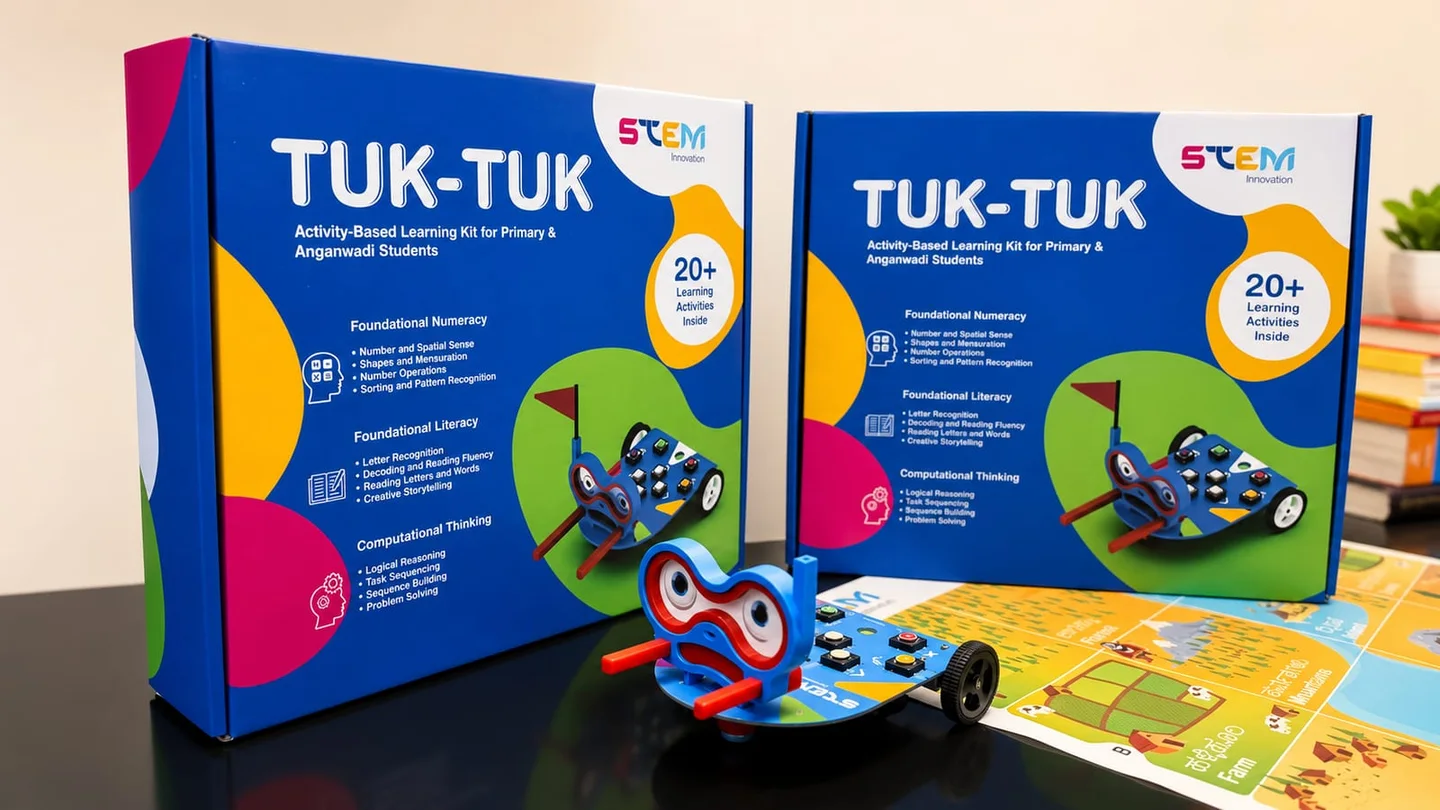
Overview
Screen-free educational robotics uses physical interaction with a robot rather than an app-based lesson. In a button-and-mat activity, children plan directions, watch movement and compare a result with their prediction. The educational value comes from a suitable challenge and adult conversation. A moving robot is not an independent teacher, and the term screen-free does not establish an age rating, safety certification or health benefit.
Make a plan visible
Begin with a nearby destination and ask children to describe a route before trying it. The result gives the group something concrete to discuss: which direction happened first, where the robot turned and what changed after a revised instruction. This works best when the challenge is short enough for children to follow and the target has a clear meaning in the activity.
Keep conversation at the centre
Use questions such as where should it go, what might happen and what did you notice. Allow children to point, gesture or discuss with a partner before speaking to the group. An adult can add vocabulary in a language children understand. Avoid entering all the instructions yourself while children watch; the intended experience is planning and explaining, not a robot demonstration alone.
Combine robotics with other play resources
A robot route can follow a story, lead to a picture or involve counting steps, but it should sit within a varied early-learning day. Books, blocks, pretend play, art, music and outdoor movement have their own uses. Choose robotics when its physical feedback helps a specific activity; do not suggest that screen-free robotics replaces all other resources or is universally superior.
Example: predict, test, change one step
Choose a target and invite a pair to propose a short sequence. Let the group predict the destination, then test the entered directions. If the route differs from the plan, pause and describe the difference without blaming the operator. Change one instruction, predict again and rerun. The educator listens for an explanation of cause and effect; a correct arrival without explanation is not the only measure of participation.
Check the actual equipment before use
Read the current age, handling and care instructions for the robot and accessories. Confirm a suitable surface, adequate movement space, charging arrangements and storage. Keep hands and loose materials away from the moving path as instructed by the supplier. A screen-free learning format does not remove the need for supervision or make every component suitable for younger children.
TUK-TUK as a button-based learning example
Smart Anganwadi's TUK-TUK product library shows physical controls, printed activity mats and packaged classroom presentations. The dedicated page explains its direction-and-sequencing interaction and suggested facilitator activities. Request a demonstration and current specification to evaluate it in the intended Anganwadi or preschool setting. No artificial-intelligence capability, manufacturer relationship or independent impact study is inferred from the pictures.
View the TUK-TUK product gallery
Educational context
Official guidance provides educational context, not approval or certification of this product.
- NCERT: National Curriculum Framework for the Foundational Stage (2022)
- Ministry of Education: NIPUN Bharat guidelines
Related learning guides
Planning an FLN or Anganwadi learning project?
Request a demonstration, current itemised contents and a written project quotation. Smart Anganwadi supplies and implements funded projects; it does not provide grants.
Request a Demo · Request Product Details
Smart Anganwadi™ is a tech-enabled Anganwadi implementation and execution partner operated by Arihant Enterprises, Thaltej, Ahmedabad, Gujarat 380058, India | info@smartanganwadi.com | +91 99982 43365. It is a private company, not a government department or scheme, and does not provide grants, funding, loans or any assistance or government financial support.